
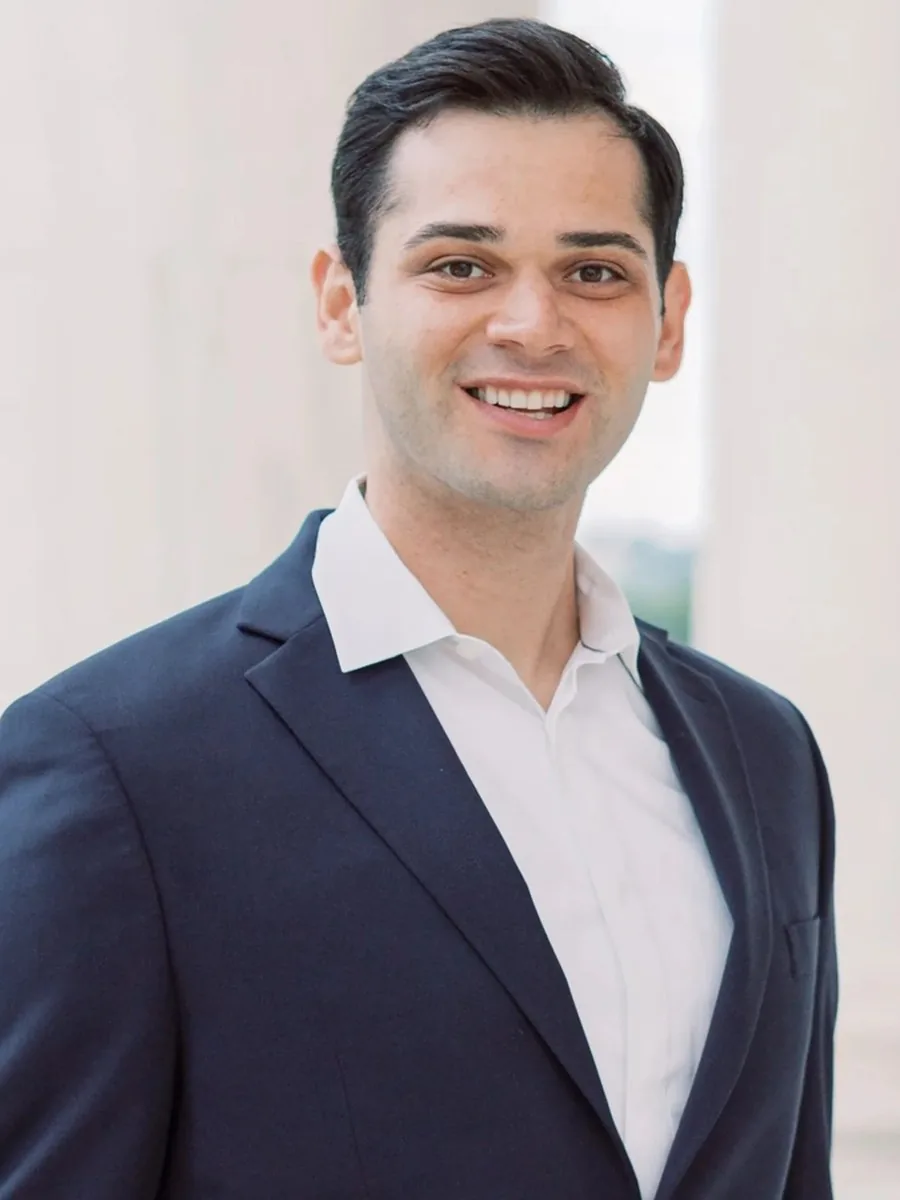
Zach Appenzeller, PsyD
Co-Founder & Director, the Evidence-Based Treatment Institute
Clinical Assistant Professor, Baylor College of Medicine · Menninger Department of Psychiatry & Behavioral Sciences · OCD & Related Disorders Program
Longer sessions & intakes prorated; virtual intensives at this same rate; in-home intensives billed separately. Our Fees
About Dr. Zach Appenzeller
I am a Licensed Psychologist specializing in evidence-based treatment for eating disorders, obsessive-compulsive disorder (OCD), anxiety, and mood disorders in children, adolescents, and adults. I work extensively with individuals and families facing complex or longstanding challenges: high-acuity cases, tangled co-occurring presentations, and those who have not responded to prior treatment.
My approach is collaborative, active, and grounded in the strongest available research. In addition to weekly outpatient therapy, I provide 1:1 treatment intensives for eating disorders, OCD, and anxiety, delivered virtually in 40+ PSYPACT states or in-home across South Florida, particularly when these conditions co-occur, or when they impact eating and weight.
I also work extensively with the patients earlier treatment hasn’t reached: people who have been in therapy before, sometimes more than once, and gotten their symptoms under control without ever feeling better underneath. Cognitive behavioral therapy and exposure-based treatment are the gold-standard behavioral approaches, and they anchor everything I do. But when they take the behavior as far as it can go and something underneath still hasn’t shifted, my expertise in schema therapy reaches the emotional core that standard cognitive-behavioral intervention cannot, so change is not only rational and behavioral, but felt at the emotional level where these patterns live. That is what makes the relief lasting.
I previously served as the Founding Director of the UTHealth Houston Center for Eating Disorders, where I built and led a comprehensive program spanning outpatient, IOP, PHP, and inpatient care. Designing and running a full continuum of eating disorder care taught me exactly what each level can and cannot do. It was there that I began developing the FBT-Anchored Modular (FAM) Model, my framework for delivering intensive eating disorder treatment in a personalized, modular way. It is anchored in Family-Based Treatment, with concurrent treatment modules built out as each patient's willingness and clinical picture require. I completed several years of specialized training in cognitive-behavioral, family-based, and temperament-informed treatments under some of the foremost experts in the field (detailed below).
I have also served on the faculty of McGovern Medical School at UTHealth Houston (where I received the Dean’s Teaching Excellence Award) and the University of Houston–Clear Lake, where I taught doctoral- and master’s-level courses on evidence-based treatment and psychotherapy skills. I regularly train and consult for other providers and organizations seeking evidence-based guidance, and I frequently present to parents, school counselors, and students, translating research into practical tools that strengthen early identification and effective intervention.
Today, I serve as a Clinical Assistant Professor in Baylor College of Medicine’s OCD and Related Disorders Program, where I supervise the clinical work of externs, doctoral interns, and postdoctoral fellows within an NIH-funded study on pediatric anxiety and OCD.
What It Is Like to Work With Me
I am not what most people picture when they think of a psychologist: no neutral affect, no practiced therapeutic distance. I am fully in the room: laughing when something is funny, direct when directness is what’s needed, genuinely curious about and connected to the person in front of me.
If you are seeking specialized, evidence-based care for yourself or a loved one, I welcome the opportunity to explore whether working together would be a good fit.
My Training and Clinical Experience
Current Academic Position
Clinical Assistant Professor, OCD & Related Disorders Program
Menninger Department of Psychiatry and Behavioral Sciences · Baylor College of Medicine. Supervises doctoral interns and postdoctoral fellows as part of an NIH-funded pediatric anxiety and OCD study.
Prior Academic Appointments
UTHealth Houston Center for Eating Disorders
Louis A. Faillace, MD, Department of Psychiatry and Behavioral Sciences · McGovern Medical School · Dean's Teaching Excellence Award recipient
University of Houston–Clear Lake
Health Service Psychology Doctoral & Clinical Psychology Master's Programs · Department of Psychological & Behavioral Health Sciences
Postdoctoral Training
OCD and Related Disorders Program
Menninger Department of Psychiatry and Behavioral Sciences · Baylor College of Medicine
Predoctoral Internship
Ascension Alexian Brothers Behavioral Health Hospital
Center for Eating Disorders · Center for Anxiety and Obsessive-Compulsive Disorders
Doctoral Externships
Behavior Therapy Center of Greater Washington (BTC)
Specialized ERP training at a nationally recognized center for OCD, anxiety, and related disorders
MedStar Georgetown University Hospital
Department of Psychiatry · Center for Wellbeing in School Environments
Capital Center for Psychotherapy and Wellness
Insight Psychological Services
Prior Professional Positions
Rankin Behavioral Health
Adult & Adolescent DBT Programs
Arlington/DC Behavior Therapy Institute
Addiction Center of Broome County
The High Frontier Youth Residential Treatment
Children's Unit for Treatment and Evaluation, Institute for Child Development, Binghamton University
Selected Writing & Media
Published Writing
Moral Scrupulosity
First author, with Patrick B. McGrath, PhD. IOCDF Faith & OCD series; a clinical guide to the moral (scrupulosity) subtype of OCD.
Atheist Scrupulosity
Co-author, with Patrick B. McGrath, PhD. IOCDF Faith & OCD series, published as "What If I'm Not Religious?"
Peer-Reviewed Publications
A Next Generation of the Schema Therapy Model of Personality Pathology
Co-author. A cross-cultural, international study protocol.
Emerging Adulthood and Depression: An Overview of Chronic Illness and Treatment
Co-author, with D. B. Riddle & E. A. Storch. A chapter in Care of Adults with Chronic Childhood Conditions (2nd ed.).
Cognitive Behavioral Therapy for Obsessive-Compulsive Disorder
Co-author, with R. R. Selles, M. L. Sulkowski & E. A. Storch. A chapter in Obsessive-Compulsive Disorder: Etiology, Phenomenology, and Treatment (2nd ed., C. W. Lack, Ed.; foreword by Jonathan S. Abramowitz).
In the Media
It's Not About the Scale: Understanding the Mental Side of Eating Disorders
Featured clinical expert.
How the Face of Mental Health Changed During the COVID-19 Pandemic
Featured clinical expert.
What It's Like to Live With Emetophobia, the Fear of Vomiting
Featured expert on emetophobia, anxiety, and OCD.
Clinical Psychologist Specializing in Eating Disorders Joins UTHealth Houston
Feature on his founding of the UTHealth Houston Center for Eating Disorders.
Diets Might Hurt More Than They Help, Says New Research
Quoted expert on eating disorders and dieting culture.
Frequently Asked Questions
Both. My caseload includes children as young as four or five, adolescents, young adults, and adults. FBT and the FAM Model are adolescent-focused by design, but CBT-E, ERP, Schema Therapy, and CBASP are adult approaches I use regularly. For eating disorder treatment specifically, the work depends on the patient's age and clinical picture, not a blanket preference. I see patients in person in Boca Raton and via telehealth across Florida and in 40+ PSYPACT states.
The Evidence-Based Treatment Institute is a private-pay practice. We do not accept insurance. We provide detailed superbills for out-of-network reimbursement submission, and many patients with PPO plans recover a meaningful portion of their fees. HSA and FSA cards are accepted. The full explanation of why we are private-pay, and what it makes possible clinically, is on our Fees & Insurance page.
Yes, and for many of my patients, treating them simultaneously is the only approach that produces durable results. This is precisely what the FAM Model was developed for. OCD and eating disorders co-occur in a clinically significant percentage of cases, and treating one while ignoring the other consistently produces incomplete outcomes. If your child or family member has both, please mention that when you reach out; it is directly relevant to how I would structure treatment.
Possibly, and the answer depends on understanding what happened. The most common reasons FBT produces insufficient results are: it wasn't delivered with genuine fidelity to the model; co-occurring OCD or anxiety was not addressed; the family's implementation broke down under pressure without adequate clinical support; or the intensity of the treatment didn't match the severity of the illness. Prior FBT failure is not a contraindication for trying again with the right support. It is a clinical signal worth understanding carefully. I'd encourage you to reach out and describe what happened; the details matter.
Yes. When the clinical fit is confirmed after a screening call, we schedule your first session together. Submit a new patient inquiry through our Get Started page and we will be in touch within one business day, usually the same day.
Yes. I personally provide in-home eating disorder intensives in South Florida (Boca Raton, Delray Beach, Boynton Beach, West Palm Beach, Fort Lauderdale, Coral Springs, Parkland, and surrounding Palm Beach and Broward County communities). Our practice also offers in-home intensives in Houston, Denver, and the Chicago area through other members of our team. In-home sessions are billed at double my standard session rate: $650 per hour, with a 2-hour minimum per visit, reflecting travel and extended delivery. Virtual intensives (billed at my standard session rate, the same fee as weekly therapy) are available in 40+ states via PSYPACT. We discuss logistics and format during your screening call.
Let's Find Out If We're the Right Fit for Your Family.
Whether you're navigating an eating disorder, OCD, a complex co-occurring presentation, or a case that hasn't responded to prior treatment, submit a new patient inquiry and we'll be in touch within one business day to discuss fit, approach, and next steps.
A clinician, not a scheduler, responds to every inquiry within one business day.
Request a Consultation