
When OCD or Anxiety Has Taken Over,
It's Time to Take It Back, Intensively.
Concentrated, one-to-one intensive treatment for OCD and anxiety disorders (exposure-based CBT and ERP), delivered two ways: virtual 1:1 intensives by secure video in 40+ states through PSYPACT, and in-home, in-vivo intensives across South Florida, Houston, Denver, and Chicago. Built for patients who need more than weekly therapy can provide.
Recovery has to happen where the OCD or anxiety actually lives, so our intensives go there, in person and virtually. In our in-person metros, that means concentrated treatment in your own home and longer, real-world exposure sessions out in the community, what clinicians call in-vivo work: the grocery store, the school drop-off, the highway, the places the fear has fenced off. In a virtual intensive, your clinician stays live on video while you take your phone into those very same situations, wherever you live. Either way, the places where OCD and anxiety take hold are exactly where we do the work.
We are a private-pay, boutique practice. Your intensive is built entirely around your clinical picture, not a group curriculum, not a standardized schedule. Just expert, focused ERP delivered with the intensity and fidelity the research supports.
Why Weekly ERP Sometimes Isn't Enough, and What to Do About It.
For many people, ERP once a week is a perfectly effective dose: they do the between-session work, the gains hold, and weekly care is exactly right. For others, when avoidance is extreme, the disorder is long-standing, or daily life has narrowed considerably, a higher dose simply gets there faster and with more support. The treatment is right and so is the patient; they just benefit from more of it, more closely supported, for a while.
Weekly outpatient ERP is the right starting point for most patients with OCD and anxiety. For many, it produces meaningful and durable symptom reduction over a focused course of treatment, as long as the between-session homework is adhered to and the skills are practiced independently, outside of session. And there is a population for whom a concentrated burst of treatment (more frequent, longer, more closely supported sessions) builds momentum that is harder to generate one hour a week at a time.
It helps to see why one program treats both. OCD and the anxiety disorders run on the same engine: a feared thought, sensation, or situation triggers intense distress, and the person learns to escape it: through a compulsion, a safety behavior, or simply avoiding the trigger altogether. The ritual or the avoidance works, briefly. The relief teaches the brain that the feared thing really was dangerous and that escape was necessary, so the fear grows back stronger, and the cycle tightens. Whether we call the escape a compulsion (as in OCD), a safety behavior (as in panic or social anxiety), or avoidance (as in phobias and agoraphobia), it is the same move, and the treatment is the same: approach the feared thing, and resist the escape (exposure-based CBT, called exposure and response prevention in OCD) until the brain learns, through experience, that the feared catastrophe doesn't come. That is why the gold-standard treatment for OCD is also the gold-standard treatment for the anxiety disorders, and why a single intensive model serves both.
What makes treatment work, at every level of care, is consistency: practicing the skills and interventions, again and again, until they hold. Outpatient therapy works beautifully when a patient has the knowledge, the guidance, and the self-confidence to engage in that work independently, between sessions. The independent practice and the generalization of these skills into daily life remain the same regardless of how intensive the schedule is; that part never changes.
But when OCD is severe, when anxiety is pervasive, or when a patient struggles to engage in response prevention or stay out of avoidance, weekly sessions may not provide enough support to get that independent work off the ground. Intensive treatment changes that. It lets us provide more support, earlier: more guided practice, more help approaching exactly what the patient has been avoiding, more momentum to break the cycle before it rebuilds. Many patients benefit from that expedited early support, and then step down to weekly appointments with us once the work is underway and the skills are theirs to carry.
This happens for specific, well-understood clinical reasons. When OCD is severe or an anxiety disorder is pervasive, the avoidance is more entrenched and the safety behaviors more automatic. The space between weekly sessions gives the disorder more time to rebuild what the exposure disrupted. The patient's motivation fluctuates (high after a session, lower by day six), and a week is a long time to hold the line against a compulsion or resist a safety behavior alone. And when OCD or an anxiety disorder co-occurs with other conditions like eating disorders or depression, the maintaining factors are more complex and require more intensive clinical contact to address.
Intensive treatment solves this by compressing the work, delivering in days or weeks what weekly therapy might require months to accomplish, whether the target is a compulsion, a safety behavior, or a pattern of avoidance. The research on intensive exposure programs is clear: outcomes are equivalent to or better than weekly therapy, with substantially faster response and shorter total treatment duration for appropriate candidates.
- Foa EB, Liebowitz MR, Kozak MJ, et al. (2005). Randomized, placebo-controlled trial of exposure and ritual prevention, clomipramine, and their combination in the treatment of obsessive-compulsive disorder. American Journal of Psychiatry, 162(1), 151–161. View study
- Rosa-Alcázar AI, Sánchez-Meca J, Gómez-Conesa A, Marín-Martínez F (2008). Psychological treatment of obsessive-compulsive disorder: A meta-analysis. Clinical Psychology Review, 28(8), 1310–1325. View study
- Öst LG, Havnen A, Hansen B, Kvale G (2015). Cognitive behavioral treatments of obsessive-compulsive disorder: A systematic review and meta-analysis of studies published 1993–2014. Clinical Psychology Review, 40, 156–169. View study
- Pediatric OCD Treatment Study (POTS) Team (2004). Cognitive-behavior therapy, sertraline, and their combination for children and adolescents with obsessive-compulsive disorder: The Pediatric OCD Treatment Study (POTS) randomized controlled trial. JAMA, 292(16), 1969–1976. View study
Weekly Outpatient
One session a week: the right starting point for most patients with OCD and anxiety.
EBTI Intensives
The same one-to-one ERP at a higher dose: more frequent, longer, real-world sessions.
IOP / PHP Programs
Structured group-based day programming, several hours a day on multiple days per week.
Residential / Inpatient
24-hour supervised care for patients whose safety or severity requires it.
Where our intensives sit on the continuum of care.
The Patients Our Intensives Are Built For.
Our intensives serve a specific clinical population. Not every patient with OCD or anxiety needs an intensive, and we will tell you that honestly during your screening call if weekly outpatient is the more appropriate starting point. But for the following presentations, an intensive is often the most direct and efficient path to meaningful recovery.
Treatment-Resistant OCD
Prior ERP has not produced adequate reliefPatients who have completed one or more courses of weekly ERP with a trained clinician and have not achieved adequate symptom reduction. An intensive creates a level of exposure density that a once-weekly hour simply can't reach in the same timeframe: a unique opportunity to do a great deal of focused, well-supported work in a short window.
Severe or Treatment-Resistant Anxiety
Panic, agoraphobia, social anxiety, phobias, illness anxietyIntensives aren't only for OCD. Panic disorder, agoraphobia, social anxiety, specific phobias (such as emetophobia, the fear of vomiting), separation anxiety, selective mutism, and illness anxiety disorder (health anxiety, or hypochondriasis) are all treated with exposure-based therapy, and all respond to the same concentrated, high-frequency model. For anxiety that has shut down school, work, or daily life, or that hasn't shifted with weekly sessions, an intensive delivers the volume of exposure that finally moves it.
Severe or Functionally Disabling OCD
Significant impairment in daily functioningPatients whose OCD is so severe that it has significantly disrupted school, work, relationships, or basic daily functioning: leaving the house, eating, sleeping, maintaining hygiene. The severity warrants a treatment intensity that matches it.
Patients Traveling for Specialist Care
No local ERP provider availablePatients from cities, states, or regions where ERP-trained, OCD-specialist clinicians are not available. Many of our intensive patients travel to Boca Raton, Houston, Denver, or Chicago for an in-person intensive, or access us remotely via PSYPACT, because what we offer simply does not exist in their local area.
Life Transition Urgency
College, new job, parenthood, major changePatients who need to make significant progress before a major life transition: starting college, beginning a new role, having a child. The timeline doesn't allow for a months-long weekly program. An intensive compresses the treatment window to match the deadline.
OCD With Co-Occurring Conditions
Eating disorders, PTSD, depression alongside OCDWhen OCD co-occurs with an eating disorder, trauma history, or significant depression, the clinical complexity often requires more intensive contact than weekly therapy allows. We treat the full picture simultaneously, not sequentially.
Severe Childhood or Adolescent OCD
Family accommodation is pervasiveChildren and adolescents whose OCD has generated significant family accommodation, where the entire household has reorganized around the OCD's demands. Intensive treatment addresses both the patient's OCD and the family system maintaining it.
PANS/PANDAS-Related OCD
Abrupt-onset OCD, treated alongside your medical teamWhen OCD or severe anxiety appears suddenly and dramatically in a child, as in PANS and PANDAS presentations, families need treatment that can move at the same speed. We deliver ERP for the OCD and anxiety symptoms while coordinating closely with your child's medical team, and because these presentations often flare and remit, the flexible, higher-dose structure of an intensive fits them far better than a fixed weekly schedule.
What an Intensive Actually Looks Like: Flexible, Not a Fixed Program.
An intensive at the Evidence-Based Treatment Institute is not a separate program you enroll in, and it is not a group. It is simply more of the same one-to-one therapy, with your own clinician and your own treatment plan, delivered at a higher dose. In practice, that means some combination of more frequent sessions (two, three, or more times a week instead of once) and longer sessions (90 minutes, two hours, or a half-day block instead of a standard session), scaled up and back down as your clinical needs change.
There is no fixed schedule, no set number of days, no curriculum every patient moves through. The frequency and length are decided between you and your clinician and adjusted as you go: more contact when you need to build momentum or push through a hard stretch, less as the work takes hold and you step back toward a standard weekly rhythm.
Ways we increase the dose
- More sessions per week: two, three, or more, rather than one
- Longer sessions: 90 minutes, two hours, or a half-day block when the work calls for it
- Extended in-person sessions that allow real-world, in-vivo exposure (more on that below)
- Live, real-world exposure in virtual intensives: your clinician on video, coaching in the moment, as you enter the situations the fear has restricted
- Closer support around the hard moments, including response prevention help in the period right after a difficult exposure
- Frequent review and plan adjustment as the work progresses
- Family involvement woven in where clinically indicated
What stays the same as weekly therapy
- It is the same evidence-based treatment: ERP for OCD, exposure-based CBT for anxiety
- You work one-to-one with your own clinician throughout, never a rotating team or a group
- Your exposure hierarchy is built for your presentation, not a standardized track
- The independent practice between sessions still matters; an intensive front-loads support to get it going
- You step down to a standard weekly rhythm with the same clinician once the momentum holds
ERP in the Real World, Not Just in a Therapy Room.
In weekly care, exposures are planned in session and the patient practices them on their own between visits, which works well for many people. The longer, more frequent sessions an intensive makes room for add something weekly care usually can't: a clinician right there with you in the real-world settings where the OCD actually operates, at the moment the work is hardest.
Our intensives break that pattern by moving treatment into the environments where the OCD lives, especially during the longer, in-person sessions a higher dose makes room for. Whenever we can, a clinician accompanies the patient in person: to the grocery store they've been unable to touch products in, to the public restroom they've been avoiding for two years, to the highway they haven't driven since a harm obsession made it feel too dangerous, to the restaurant where contamination fears have made eating out impossible.
This is not exposure tourism. Each community-based session is planned, graduated, and debriefed with clinical precision. The clinician is present not as a safety behavior, not as reassurance, but as a coach who helps the patient tolerate the discomfort and resist the compulsion at the moment it is hardest to do so.
Real-world exposure isn't limited to our in-person cities. In telehealth intensives, we do it too: your clinician stays on the video call while you take your phone into the situation the OCD has restricted (the store, the parking garage, the elevator, the crowded street), so the exposure happens live, in your own environment, with your clinician coaching you through it in real time. For many patients, doing the work in the exact place they live their life is more powerful than anything that could happen in a therapy room.
Where we conduct real-world exposure work in our in-person cities:
Contamination OCD
Grocery stores, public restrooms, restaurants, gas stations, hospitals, beach environments: any surface or location that has become off-limits because of contamination fear. Including the specific local environments that have become restricted.
Harm OCD
Kitchens with knives, driving on the highways you've been avoiding, being in the presence of children or vulnerable people, handling tools: the environments the harm OCD has placed under restriction and that the patient has been avoiding.
Scrupulosity OCD
Churches, mosques, synagogues, and places of worship, and the internal work of tolerating uncertainty about moral or religious rightness without confessing, praying compulsively, or seeking reassurance from clergy.
Symmetry & Just-Right OCD
Workplaces, classrooms, home environments: wherever arranging, ordering, or repeating actions has become time-consuming and disruptive. Practicing task completion without the ritual in the actual environment where it matters.
Social Anxiety
Restaurants, coffee shops, social gatherings, workplaces, presentations: wherever avoidance has constrained the patient's life. Graduated, supported exposure in live social environments.
Agoraphobia & Panic
Shopping malls, public transit, movie theaters, crowded spaces, driving on highways: the situations avoided because of panic or agoraphobia. Interoceptive and situational exposure conducted in the actual avoided environment.
Two Ways to Access Intensive Care: Virtual or In Person.
There are two ways to do intensive work with us: virtual 1:1 intensives from anywhere in 40+ PSYPACT states, and in-person, in-home intensives in our four metro regions. In-home intensives are available around Boca Raton, Houston, Denver, and Chicago; virtual intensives reach Austin and every other state where we are licensed. Both are the same flexible, higher-dose one-to-one therapy with your own clinician; the only difference is where the work happens. We'll help you find the right fit during your screening call. Most families offset a meaningful portion through out-of-network benefits; see how reimbursement works.
Virtual 1:1 Intensive
Telehealth · 40+ PSYPACT StatesHigher-dose one-to-one therapy by secure video: more frequent and/or longer sessions with your own clinician. Real-world exposure still happens: your clinician stays on the call while you take your phone into the situations the OCD or anxiety has restricted, coaching you live in your own environment. Substantially more effective than weekly outpatient for appropriate presentations.
In-Person: South Florida · Houston · Denver · Chicago
1:1 In-Person · 4 MetrosHigher-dose one-to-one therapy in person: more frequent and/or longer sessions with your own clinician, from one of our in-person metro regions (South Florida, Houston, Denver, Chicago). The longer in-person sessions are where we can do real-world, in-vivo exposure work alongside you in the surrounding community. Frequency and length are set with your clinician, not a fixed schedule. Ideal for patients local to one of these regions.
Family Accommodation Is One of the Most Powerful Maintaining Factors in OCD, and We Address It Directly.
In both OCD and anxiety disorders, families almost always get pulled into the disorder. Parents provide reassurance, accommodate rituals, help a child avoid a feared situation, sit outside the bedroom, answer the same worried question for the hundredth time, or rearrange the household around what the disorder demands. With OCD it looks like participating in compulsions; with anxiety it looks like helping the person avoid what frightens them. The intention is loving: relieve the distress in front of you. But accommodation is one of the most powerful factors maintaining both conditions: every accommodation teaches the brain that the feared thing was genuinely dangerous and that avoidance was necessary, which strengthens the very disorder the family is trying to ease.
When families provide reassurance to an OCD question, they confirm that the question was worth asking. When they modify routines to prevent exposure to a trigger, they confirm that the trigger is genuinely dangerous. Each accommodation, intended to help, makes the OCD stronger.
What family involvement in our intensive looks like:
Accommodation Mapping
In the first week of the intensive, we conduct a thorough assessment of all the ways family members are currently accommodating the OCD or anxiety disorder, including accommodations that feel so automatic they no longer register as accommodation. This map becomes a central treatment target.
Family Psychoeducation
We provide family members with a clear, honest understanding of how accommodation maintains OCD and anxiety and what the research shows about the impact of reducing it. We do this with compassion: family members didn't create this pattern, and blame is never part of how we approach this conversation.
Coached Accommodation Reduction
We guide family members through the gradual, planned reduction of accommodating behaviors, with scripts for how to respond to OCD requests, how to tolerate the patient's distress without caving, and how to provide support that promotes recovery rather than avoiding discomfort.
Parent and Partner Sessions
For adolescents, we include parents in sessions regularly throughout the intensive. For adults, we involve partners or family members where the patient consents and clinical benefit is clear. Family members leave the intensive with practical skills, not just understanding.
Parents who understand the OCD cycle, who can manage their own anxiety about their child's distress, and who know how to respond to accommodation requests without complying are among the most powerful tools in the treatment. We invest in building that capacity.
If weekly therapy hasn't moved things the way you hoped, an intensive might be what changes that. Reach out and we can talk it through; a clinician responds within one business day.
Request a ConsultationThe Path From Inquiry to Treatment, Step by Step.
We know that patients and families inquiring about intensive treatment are often at a point of significant distress. We have designed our intake process to move efficiently, provide clear answers, and eliminate unnecessary waiting.
Initial Inquiry
Contact us through our new patient inquiry form or by phone. Intensive inquiries receive priority response: you will hear back within one business day. You do not need a polished clinical summary or a confirmed diagnosis. Tell us what's happening, how long it's been happening, and what you've already tried.
Clinical Screening Call
A direct conversation with one of our clinicians to understand the full picture: the OCD or anxiety presentation and any subtypes involved, current severity and functional impairment, treatment history, co-occurring conditions, and geographic logistics. We use this call to determine fit and, if appropriate, begin sketching the structure of your intensive.
Comprehensive Intake Assessment
An extended first session, in person or via telehealth, covering detailed diagnostic assessment, OCD subtype or anxiety disorder identification, functional analysis, exposure hierarchy development, and treatment plan formulation. By the end of this session, a written plan is already taking shape: specific exposure targets, response prevention goals, a timeline, and a schedule.
Fee Agreement and Logistics
We discuss the complete fee structure, the weekly schedule, and any coordination needed with your existing treatment team or prescribing clinician. Every question is answered before treatment begins. No ambiguity, no surprises.
Intensive Treatment Begins
Intensive inquiries are prioritized. When clinical fit is confirmed and logistics are agreed upon, treatment starts.
Transition Planning and Step-Down
Transition planning begins in the first week of treatment, not the last. We identify what the appropriate next level of care looks like, what milestones need to be met before step-down, and how to ensure continuity as the patient moves from intensive to outpatient maintenance.
Your Own Specialist, at a Higher Dose.
An intensive here isn't a separate program or a group. It's your own specialist clinician and your own plan, delivered more often and out in the field where the OCD or anxiety actually lives. These are the clinicians who do that work.

Zach Appenzeller, PsyD
Clinical Assistant Professor at Baylor College of Medicine's OCD Program and developer of the FAM Model. Specializes in OCD, eating disorders, and the complex cases where they overlap, particularly treatment-resistant presentations.
Read Dr. Appenzeller's full bio
Allie Appenzeller, PsyD
Clinical Assistant Professor of BCM's OCD Program and Founding Director of BCM's ARPA School Anxiety & School Refusal Program. Specializes in OCD, anxiety, school refusal, and perinatal mental health, with deep expertise in ERP and SPACE.
Read Dr. Appenzeller's full bio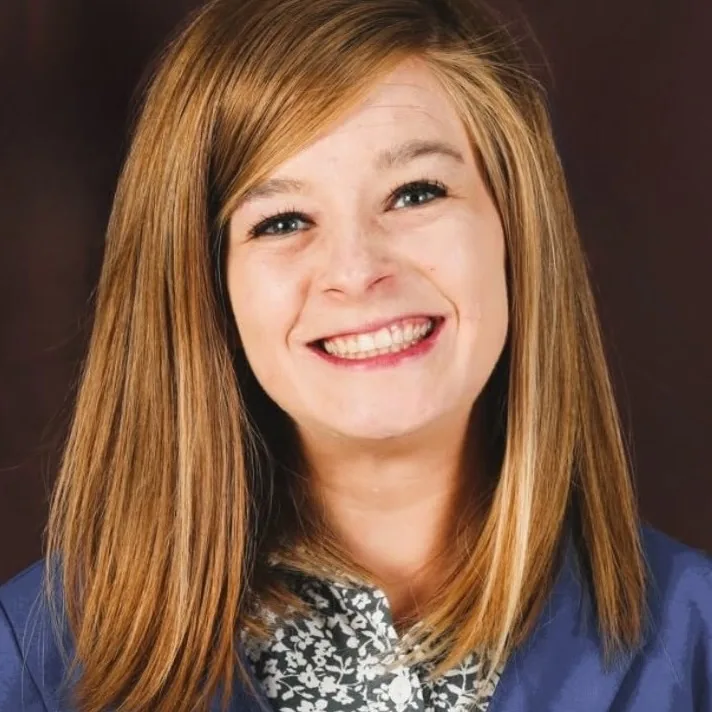
Kimberly Osborn, PhD
Specialty in OCD and anxiety alongside eating disorders (ERP, ACT, CBT-E, and FBT) for children, teens, and adults. Postdoctoral Fellow with the Eating and Anxiety Treatment (EAT) Lab at the University of Louisville.
Read Dr. Osborn's full bio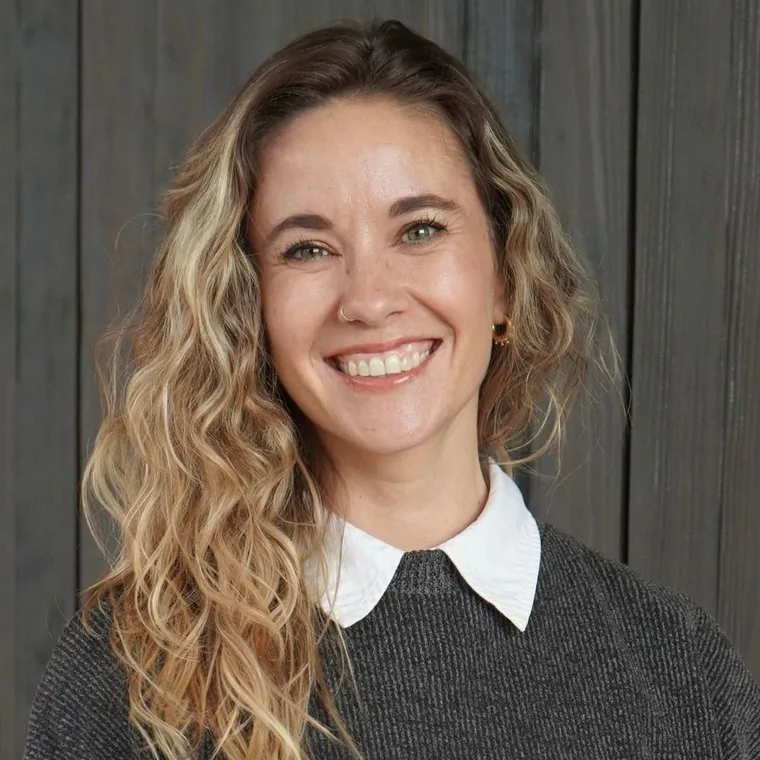
Kaitlin Hill, PhD
Trained at Rogers Behavioral Health's adult OCD residential program, through predoctoral internship and postdoctoral fellowship, then clinical work at the OCD Institute of Texas. Deep across the full range of OCD presentations, including severe and residential-level cases. Specializes in ERP for OCD and anxiety.
Read Dr. Hill's full bio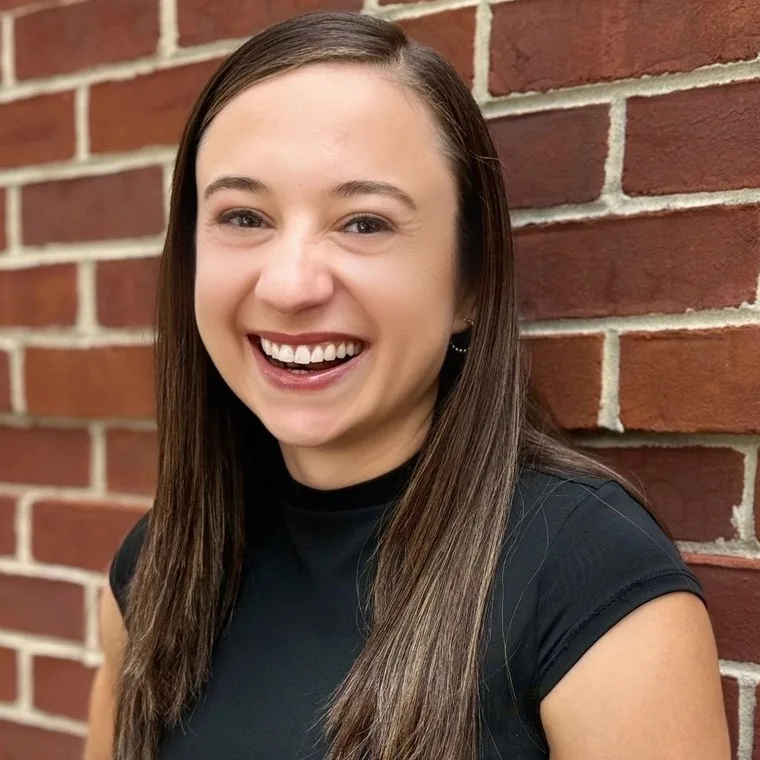
Eliza Lanzillo, PhD
Trained at the Baylor College of Medicine OCD Program, one of the foremost OCD specialty training programs in the country, building deep expertise in ERP for OCD and related conditions. Also a former NIMH suicide-prevention researcher whose work informs care for complex, co-occurring presentations.
Read Dr. Lanzillo's full bio
Natalia Levy, PhD
Brings more than three decades of work with anxious children, adolescents, and adults, and with their families. She understands how anxiety shifts across the lifespan, and how the family system around an anxious person can either ease the anxiety or unintentionally feed it.
Read Dr. Levy's full bioReady to explore an intensive? Reach out and a clinician, not a scheduler, gets back to you within one business day.
Request a ConsultationFrequently Asked Questions: OCD & Anxiety Intensives.
If Weekly Therapy Hasn't Been Enough, Intensive ERP Might Be What Changes Everything.
Most patients who contact us about our intensives have already done the work. They've been in therapy. They've tried ERP, or something called ERP. They've wanted to get better more than almost anything. And the OCD or anxiety is still there.
That history does not close any doors. It opens one. Because now we know what hasn't worked, and we can build something different.
Intensive ERP is available right now, delivered by specialists, in the environments where your OCD or anxiety actually operates, with the frequency and fidelity the research supports. And it starts with a single inquiry, answered within one business day.
Request a Consultation